|
By Jack Krayenhoff
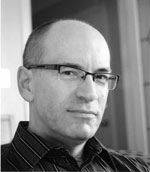 | | Michael Skinner |
THE CLERGY and the overwhelming majority of
Victoria’s St. Matthias Church have voted to join the Anglican
Network in Canada (ANiC), in the process severing its ties with the Bishop
of Vancouver Island and the Anglican Church of Canada (ACC).
BCCN interviewed
Michael Skinner, a lawyer, who is the media spokesman of the group.
Skinner explained: “Our rector, Ron Corcoran,
believes passionately in episcopal oversight. But he faced a dilemma,
because the highest leadership of the Anglican Church of Canada had for a
number of years been setting a course to alter foundational, biblical
Anglican church doctrine. Ron had already determined that if he could no
longer obey his bishop in good conscience, he would have to resign.
“Now, with the formation of the ANiC, an
alternative had emerged, where he could function under biblically orthodox
episcopal oversight provided by Bishop Donald Harvey, Moderator of ANiC,
functioning under the jurisdiction of Gregory Venables . . . . This
alternative would allow St. Matthias to remain in full communion with that
greater part of the worldwide Anglican church that believes the American
and Canadian Anglican church has become apostate.”
Skinner noted another key factor Corcoran struggled
with.
“The other part of the dilemma was Ron’s
commitment to the congregation. With his influence, he could have simply
announced his resignation – and many in the congregation would have
followed him. But the question would then be: are they following Ron, or
Jesus?
“The path he took, chosen with great care and
consultation with leadership within the parish, was to lead the church on a
disciplined, years-long path of biblical discernment as to its future.
To respect the bishop’s directive, this had to be done without
mentioning ANiC within the premises of the church. Suffice to say we were
walking on eggshells.”
At the conclusion of the discernment process, Corcoran
and the other clergy of St. Matthias tendered their resignation, to take
effect March 8. But Diocesan Archdeacon Bruce Bryant-Scott beat them to the
draw.
Acting on behalf of Bishop James Cowan, who was away on
study leave, he sent an email to St. Matthias, announcing he had accepted
the resignation effective immediately, February 26.
He gave as reason for this action, “I am
compelled to do this because, as you stated in your letter, you can no
longer give your obedience to those in authority over you.” As he
further explained in the Diocesan Post, his action was based on canon law.
“The parish as such cannot leave the Diocese of
B.C. any more than the City of Victoria can vote to become part of
Washington State” and further, “The Anglican Church is
episcopally led and synodically governed, but in this case
congregationalism has been the dominant ecclesiology.”
As this email was being opened by the church secretary,
Bryant-Scott himself arrived, accompanied by two other individuals, who
gave Corcoran a short time to collect his personal belongings from his
office, under supervision, and then escorted him from the premises.
A congregational meeting was held March 8 in another
church, to determine the future. Out of 187 church members attending, 94
percent voted to join ANiC.
The transition was to be as seamless as possible, with
the clergy continuing to function as before. Sunday worship would continue
at the Fairfield Community Centre, not far from St. Matthias, with 1 pm
services in March, and 8 and 10 am services resuming April 5.
Continue article >>
|
Skinner described this landmark meeting as
“quietly joyful – respectful and peaceful.” He continued,
“Some people were grieving for having to leave the building that
contained so many memories of very significant ministry in their lives, but
we avoided acrimony.”
BCCN asked if it was
not possible to stay within the Anglican Church of Canada and try to reform
it from within.
“That is a legitimate position”, Skinner
responded, “and we have considered it. But though it is a noble
enterprise, it is probably a fruitless one. The ACC has been on a
well-defined trajectory for many years now. There is the gradual erosion of
biblical doctrine, the alteration of the canons. Some of the bishops
are rebellious against the gospel, saying it was misrepresented in the
past.
“The issue of blessing gay unions is just the
most visible symptom that attracts the attention of the secular press. The
real issue about which people are concerned is the authority of scripture.
Without the authentic, living, life-changing word that has survived
countless assaults over the centuries, the church is just a marginally
relevant social club.”
Any plans to contest the diocesan possession of the
church buildings?
“We decided not to leave amid litigation. We want
to move forward with dignity, and avoid any negative attitudes that could
accompany such a transition. I prefer to think of this as a fork in the
road rather than a church split. When in the future we meet friends who
chose to stay within the building, we want to be able to greet them warmly,
as brothers and sisters in Christ.”
A month earlier an almost identical chain of events
occurred at St. Mary’s Anglican Church in Nanoose Bay, and for the
same reasons. Rev. Guy Bellerby reported that 85 percent of the
congregation voted to join ANiC, and now meet at the local library, with
the administration and future ministry being housed at Seven Springs
Retreat Centre.
Bellerby views the future with enthusiasm and
confidence. Already his congregation, called Christ’s Church
(Oceanside), has a Sunday attendance at least 10 percent greater than it
used to be at St. Mary’s.
He is planning new family ministry and a discipleship
program, as well as an evangelistic mission during the last week of May. It
will be conducted by Steven James, now rector of the largest Anglican
church in Northern England. For four years he was responsible for the
evening service of St. John’s Shaughnessy in Vancouver, where the
attendance grew from 75 to 400.
April 2009
|