 |
| Craig Greenfield, his wife Nay and their children live in Vancouver’s Downtown Eastside. Photo: ServantsAsia.org. |
ACCORDING to the United Nations, one out of every six people on earth lives in a
slum. Yet those who intentionally relocate to these communities for the sake of
Jesus’ upside-down kingdom are humiliatingly few.
At least one out of every six missionaries should be moving in to reach out to
this, the world’s largest unreached people group. Instead, it is probably more like one in 6,000
missionaries, just a handful worldwide, who will move into slums.
For those called to minister among the urban poor, relocating into a slum is one
of the best ways to become familiar with the culture and language of a
community and build mutually transformative relationships.
However, finding your own home in a slum can be a major challenge, particularly
if you don’t speak the language. In every city in which God has called our organization to
start an incarnational ministry team, it has been unprecedented, unexpected – and, initially at least, downright strange to the local people.
So, if you are called to move into a slum, begin by asking your local friends
and contacts if they know of a suitable place. But don’t be completely floored if people tell you you’re crazy – that foreigners cannot live in a slum. This is a normal and expected response,
so don’t be discouraged. After all, they are used to missionaries living in fancy
villas and missionary compounds, not slums and squatter settlements.
It might be worth visiting slums where previous team members have stayed, to get
an idea of what kinds of places are possible.
Sometimes it will make sense to move into a slum where others have lived before – to provide continuity and perhaps an easier landing.
Ultimately, the house you choose needs to be a sustainable place to live
regardless of the season: hot or cold, wet or dry, windy, muggy or frosty . . .
If you can, look for something close to where other team members are living. This will be important in order to avoid being isolated, and nearby team
members can provide valuable support in crises.
Not too close though – too many foreigners concentrated in one spot can overwhelm a community.
Things move slowly in poor communities, and are primarily relational. So find
places where people hang out in the slums, perhaps coffee shops or drink
stands, and sample the local food or relax over a drink. In the process you can
begin to get to know people and ask them about places for rent in the area . .
.
Think carefully about the language and ethnic mix of the slum, and whether these
are the people you hoped to reach out to. No point slaving away on a language
that is not the heart language of the majority of your community. Slums are
often organized along ethnic lines, so choose your neighbours strategically.
There are a few common traps to watch out for.
Take note of this one, it could drive you insane: beware all karaoke bars! They
can make noise levels unbearable, and sleep may become a thing of the past.
If you are seriously considering a place with a nearby karaoke bar, at least try
to spend a night or two with friends in the slum to see if it is viable.
On this note, be sure to visit the house at different times of the day and night
to get a feel for the place, and make sure you don’t get any nasty surprises . . .
Remember Jesus’ directions to his disciples when he sent them out as missionaries. He sent them
out two by two, to find a third person: a “person of peace.”
Pray and look for men and women of peace, who demonstrate the values of his
kingdom – compassion, hospitality and mercy – though they may not yet know Jesus.
Continue article >>
|
It may be just such a person of peace that will welcome you, and open doors for
you to move into a community. Or you may meet this person of peace after you
have moved into the community. Either way, prayer and reliance on God will be
the foundation of your move, and your relationships.
You should exercise a bit of caution about throwing in your allegiance with
someone, for example your landlord, who is actually disliked by much of the
community, or represents a faction. You then become aligned with that faction
too, like it or not, and end up starting off on the wrong foot with everyone.
Sadly, that could even mean the local church, if their witness is not a good
one.
Some of the first people you meet may be those with good English, and they may
appear to be quite charming and friendly, but somehow you need to get a feel
for how the rest of the community perceives them.
Prayerfully consider whether they are truly a person of peace as far as the rest
of the community is concerned. In many places, ‘friendship’ with the foreigner can be perceived as a means to increase social status and
income.
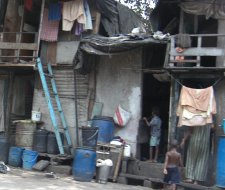 |
| Swaminathan. |
Often, the only way of working all this out is to spend some time in the
community at a temporary location before committing to a long term one. There
is no need to rush the commitment if it doesn’t feel right.
Be aware too of who the official (police, village chief, etc.) and the
unofficial gate keepers are, whose permission you have to have before you can
move into a community.
In some places, you may have to provide photocopies of passports and visas to
local police when you move in. Local cultural brokers can help you find your
way through all this.
Finally, it will be important that the slum community accepts your reasons for
being there, and that there is no significant political or religious opposition
or agitation related to your presence – in other words, that you are physically safe.
In India, for example, this has been a challenge, as relocation of foreigners
into slums has at times been perceived as a political move in order to agitate
the ‘masses’ for revolution. Revolution by the masses seems to really tick off the local
authorities for some reason.
Despite this challenge, God has always opened up a place for us to move in and
brought us to men and women of peace who have helped open the way.
So it’s wise to carefully think through how you plan to describe your reasons for
living there in the slum.
This may revolve around the theme of being a ‘learner.’ For example, wanting to learn the ‘real’ language of the people – rather than what they teach in the classroom.
All of the preceding preparation should be combined with some serious prayer,
and lots of hours wandering around slum communities. Expect long delays and
lots of sweaty, dusty, disappointing days. When feeling discouraged, whistle
the tune to Mission Impossible; or for a more spiritual approach, hum ‘God will make a way, where there seems to be no way’ – and reflect on the absurdity of your situation.
You’ll need to keep a sense of humour, be a bit courageous, and ignore the
naysayers. It is always a miracle when God establishes a team in a slum
community. But God is faithful and the 25 year history of Servants is truly the
story of God opening up the doors to one community after another.
Craig Greenfield is international coordinator of Servants, and author of The
Urban Halo. He and his family lived in three different Cambodian slums for a
total of six years. They currently live in the Downtown Eastside of Vancouver.
ServantsAsia.org
April 2010
|