|
By John Cody
 “I’ve no time for religion, maybe doubt is a modern
disease / then I look at you and here’s what I do. I wear holes in both my
knees.” “I’ve no time for religion, maybe doubt is a modern
disease / then I look at you and here’s what I do. I wear holes in both my
knees.”
So begins ‘God Watch Over You,’ from Wendy Matthew’s The
Witness Tree.
Back when I used to compile year-end best-of lists for
this paper, that album was my favorite release of 1994. Matthews’ self
described “non-traditional gospel album” boasted a formidable song selection -
of which that song, along with similar-themed ‘Ride,’ were highlights.
 Both came from the pen of Paddy McAloon, best known as
leader of Prefab Sprout. That group never quite cracked America; but in their
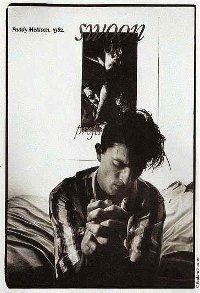
heyday, they were favorites in their English homeland. Their 1984 debut album, Swoon
served notice of remarkable talent. Thanks to intelligent, emotionally astute
lyrics – not to mention a formidable wit and memorable sense of melody -
McAloon has been hailed as one of the great composers of his generation,
garnering favorable comparisons to everyone from Bacharach, Sondheim and Cole
Porter to Lennon and McCartney. Both came from the pen of Paddy McAloon, best known as
leader of Prefab Sprout. That group never quite cracked America; but in their
heyday, they were favorites in their English homeland. Their 1984 debut album, Swoon
served notice of remarkable talent. Thanks to intelligent, emotionally astute
lyrics – not to mention a formidable wit and memorable sense of melody -
McAloon has been hailed as one of the great composers of his generation,
garnering favorable comparisons to everyone from Bacharach, Sondheim and Cole
Porter to Lennon and McCartney.
1990’s Jordan: The Comeback, a 19-song concept
album addressing – among other subjects - faith and celebrity, was one of their
most popular releases. In spite of healthy sales, the eagerly awaited follow-up
was conspicuous in its absence.
 It was another seven years until Andromeda Heights arrived.
As it turns out, there was an entire album in between. Originally slated for
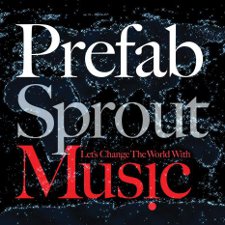
release in 1992, Let’s Change the World With Music was a bold concept,
even by McAloon’s standards. It was another seven years until Andromeda Heights arrived.
As it turns out, there was an entire album in between. Originally slated for
release in 1992, Let’s Change the World With Music was a bold concept,
even by McAloon’s standards.
Completely
concerned with the nature of God, and the function music serves, McAloon knew
his subject well; he had trained as a Catholic priest before deciding to pursue
music as a vocation. Perhaps the most transparent, and heartfelt undertaking of
his career, the album got as far as the demo stage before the record company
nixed the project, claiming the subject matter was simply too contentious.
Now, free from major label ties, and almost two decades
on, Let’s Change The World is finally available.
Writing about music can be a fruitless endeavor. Despite
numerous books and documentaries purporting to explain exactly why we’re
susceptible to a good song, exactly what happens and why remains a mystery. For
all the self-styled experts, maybe it takes someone like McAloon, who, rather
than dissect, is willing to let the mystery remain.
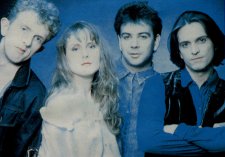 | | Prefab Sprout (McAloon on right). |
He employs religious imagery throughout, and begins at
the beginning: “From the start this world was violent / man asked ‘why?’ but
the sky was silent / God was moved / He made a choice / He said ‘let music be
my voice.’”
God heals and reveals through song; “you shall hear my
story / you will glimpse my glory, and find a refuge from the trouble that you
see / Let there be music! Music will be / And if your burden grieves you, your
baby ups and leaves you / I’ll be your blues if you should choose to lean on
me.”
McAloon’s creator is present, and not silent. There is
compassion for his creation: ‘I am always near you, so don’t think I can’t hear
you / I am present, I am calling in the sound when rain is falling / I wear the
thin disguise of a lover’s sobs and sighs.”
He cites Graham Greene’s response regarding his return to
Catholicism later in life: “I began to doubt doubt,” as indicative of where
he’s at these days. “For me, a similar thing goes on when I read [books like Richard
Dawkins’] God Delusion or whatever. I can agree with almost everything
in them. But something in me - well, I'm a reasonable guy, and I'm cynical, and
I'm rational. But I have no reason to believe that my reason is telling me
everything. I think the songs sometimes come from that place.”
Continue article >>
|
He admits to an inherent distrust of “happy-clappy
records,” that impose rigid world views on the audience. “As a writer you've
got to distance yourself even from things you might be prone to believe in,
otherwise it might just seem that you're selling certainty: ‘this worked for
me, so I'm going to foist it on you." I don't find that very attractive.’”
Instead, he attempts to create what he describes as “an opening for the
listener.”
In many ways, the album brings to mind Surprised By
Joy, C.S. Lewis’ autobiographical work - in which he recounted life before he accepted that “God was
God.”
Upon glimpsing the transcendent – what he referred to as
joy - he would attempt to recreate the experience. It can occur in any number
of ways. Sports, nature, family, sex, community: under the right circumstances,
each can lead to a heightened sense of the divine.
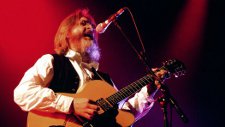 Music is simply one of the most effective methods. From
rousing national anthems – witness the recent Winter Olympics - to human rights
groups sharing songs of solidarity, to church congregations offering praise,
the power is undeniable; the listener is transported in an instant to a better
place. Music is simply one of the most effective methods. From
rousing national anthems – witness the recent Winter Olympics - to human rights
groups sharing songs of solidarity, to church congregations offering praise,
the power is undeniable; the listener is transported in an instant to a better
place.
Lewis would likely be quick to point out that the
experience itself is simply an echo of God’s love; he invariably met with
failure when trying to recreate specific circumstances. It was only later he
realized they were simply reflections – through a glass darkly - of the
creator.
McAloon returns to the gospel story repeatedly. ‘Ride’
reveals a keen awareness: ‘I look around me and I see folks leading more
constructive lives than me / They don’t do this for reward, they are walking in
the footsteps of their lord.”
Later, ‘Sweet Gospel Music’ offers a testimony of sorts:
“My poor heart was heavy, my poor heart was stone / then I heard them, they
were angels / and they were singing ‘you’re not alone, there is a peace (peace)
you’ve never known.’”
‘Earth: The Story So Far’ does double duty, serving as
the title track to another equally ambitious concept album: an
as-yet-unreleased 30-song history of our planet.
The lyrics fit perfectly: “There was a baby in a stable,
some say it was the lord…Why, if it’s no more than a fable, should it strike so
deep a chord?”
The song goes on to address the supposed struggle between
higher education and faith: “Science broke the news, the only absolute is
light…Wasn’t that the message of the star on Christmas night?”
As the plug was pulled before the full band could begin
recording, these are the original demos. That’s hardly a concern; in spite of
dated production values, the album stands on its own; fully-realized and more
enduring than the vast majority of music released today.
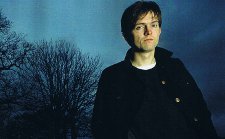 While they’ve never officially broken up, Prefab Sprout
eventually became less of a going concern. In hindsight, it was clear McAloon
was cheerfully waving goodbye to fame and the pressures of commercial success. While they’ve never officially broken up, Prefab Sprout
eventually became less of a going concern. In hindsight, it was clear McAloon
was cheerfully waving goodbye to fame and the pressures of commercial success.
The last decade has brought what he refers to as a
“double whammy” of health problems: tinnitus -a severe hearing impairment that
left him unable to sing without experiencing intense pain - and a degenerative
eye condition that has to a large degree since been remedied.
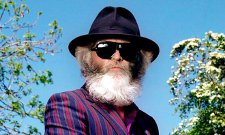 Ever the pragmatist, he began listening to CB radio and
call-in talk shows after losing his sight, which inspired his first solo disc,
2003’s I Trawl The Megahirtz, a fascinatingly unique effort. The disc
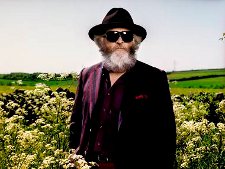
includes a lyric he obviously took to heart; “I’ll grow a long and silver beard
and let it reach my knees.” Ever the pragmatist, he began listening to CB radio and
call-in talk shows after losing his sight, which inspired his first solo disc,
2003’s I Trawl The Megahirtz, a fascinatingly unique effort. The disc
includes a lyric he obviously took to heart; “I’ll grow a long and silver beard
and let it reach my knees.”
Aside from the health issues, the married father of three
appears content with his lot, composing daily, and rarely looking back. Despite
a formidable catalogue of unreleased work (over a dozen projects written,
recorded and subsequently abandoned) he’s more interested in the creative
process, as he explained recently in an interview with The Independent:
“When I finish something I listen to it intensively for a short period, then never
look at it again. And I'm not really that interested. But when I heard this I
thought, 'Oh boy, this is good.'"
April 2010
|