By Jim Coggins
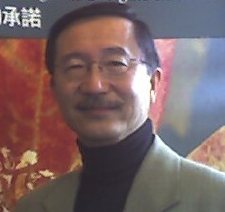 |
| Vancouver activist Bill Chu |
A DECISION by the City of Vancouver’s Planning
Department has some activists concerned about freedom of religion and
about the place of the church in Canadian society.
The immediate issue is the city’s decision to
require Tenth Avenue Alliance Church to have a social services permit in
order to operate a drop-in lunch program out of its building. The larger
issue is whether this imposes a definition of ‘church’ which
fundamentally changes the nature of Christianity.
Active church
Tenth Avenue is a Christian and Missionary Alliance
congregation not far from City Hall, with a growing attendance of 1,200 and
a variety of programs – including a daycare, an after-school kids
program, a summer camp program and many others.
For the past nine years, the church has also run Oasis,
from 10 am to 2 pm every Tuesday; Oasis offers lunch and a place to sit and
talk, or just read the newspaper. Some 70 people attend each week, some of
them homeless – and others who have places to live, but are
struggling to make ends meet.
The church also offers an Out of the Cold program,
feeding about 120 people every Monday evening and allowing up to 25 to
sleep there that night. Those staying overnight are given breakfast and
asked to leave by 7:30 am.
The church also participates in the provincial
government’s Extreme Weather Response program, opening its doors to
homeless people for an additional dozen or so nights when the weather is
very bad.
Vancouver’s Housing Department offered advice in
setting up the Out of the Cold program; but it was this program, as well as
the Extreme Weather initiative, which eventually created a problem with
City Hall.
In 2004, the church began a $3.35 million renovation of
its building. Neighbours were informed of the plans and given a list of the
church’s programs; but at two public meetings about the renovations,
neighbours asked few questions about the two homelessness programs.
Complaints
However, several months later, when renovations forced
clients of the two programs to temporarily come in the front door of the
building rather than through the back door off an alley, neighbours began
to take notice. In response to complaints, the church organized a meeting
with its neighbours.
Senior associate pastor Mardi Dolfo-Smith told BCCN: “That’s when
everything escalated.” Some residents were very angry. There were
accusations circulating that the programs were bringing undesirable people
in from other parts of the city, and that drug deals and petty crime were
becoming common.
To be fair, Dolfo-Smith says, the residents had worked
hard in recent years to drive prostitution and drug trafficking out of the
area. Some owned heritage homes, and were concerned about property values
going down.
On the other hand, the church argued that the homeless
people it serves were already in the neighbourhood. Police statistics
showed no increase in crime in the area. When a movement began to encourage
the reporting of crimes in the neighbourhood, the number of petty crimes
reported did increase, but there was no relationship between the crimes and
the times the church ran its programs.
The city Planning Department had already concluded in
the spring of 2005 that the programs went beyond what one would expect for
church use, and required the church to apply for a social services permit.
A conditional permit was granted, with several
requirements: the church must record where its clients (the church calls
them “guests”) come from; the church must send out volunteers
in coloured vests to patrol the neighbourhood before and after the events;
and the church must report regularly to the city and the neighbours. The
church is still operating the programs under this permit.
In the meantime, activist Bill Chu, who is not
connected to the church, became aware of the situation and became concerned
about the precedent that was being set.
On April 5, he called together a group of about 20
religious leaders, which included representatives of the Canadian Jewish
Congress and a local Sikh temple (which also runs a feeding program),
because the city’s definition of “church” applies to all
religious groups.
Continue article >>
| Precedent
Chu explains to BCCN that, because other cities look to Vancouver as an
example, this case could set a precedent that could create a problem for
other churches across the country if it is not challenged.
He says the problem is “a lack of understanding
of the rightful place of the church.” By insisting that a
church’s normal activity is just running religious services and that
it needs a special permit to provide “social services,” Chu
says Vancouver’s Planning Department is “redefining
church.”
He adds: “Being a caring community has always
been a very integral part of the church’s mandate.” This, he
says, is foundational – from the Genesis 1:25-26 command to care for
the earth, to Jesus’ exhortation, “Blessed are the
merciful.”
Chu says the city’s requirements put “an
onerous burden” on Tenth Avenue that is not being put on other
churches. He says requiring the church to patrol the neighbourhood is
giving the church a responsibility that rightly belongs to the police. He
adds that the requirement to determine where guests of the program come
from is “dehumanizing,” defeats the purpose of the church
opening its doors, and will put up a wall which might keep people from
coming.
Derek Creighton, a Vancouver lawyer with Access Law
Group who used to work for the city, called the city’s zoning system
“a flawed process”– since it has much less rigorous
standards of investigation and evidence than courts do, but still imposes
severe limitations on churches’ activities.
He says: “The impact could be quite significant
on narrowing what is a church use.” It might be used to limit
churches’ involvement in organizing political events on moral issues,
for instance.
Rediscover role
Chu says one of the reasons society believes all
churches do is have religious services is because that is all some churches
do. Therefore, it is important for churches to “rediscover their
role.” He says, “If we don’t use it, we will lose
it.”
In addition, Chu says churches need to do a better job
of communicating to society what they do. Therefore, he has asked churches
in the Vancouver area to “tell us what they are doing,” so his
group can report that to City Hall.
Don Hutchinson, legal counsel for the Evangelical
Fellowship of Canada, has been following the case and agrees “the
issue is one of religious freedom to practice what one believes . . .
Church involves worship within the four walls, but it also involves the
outward expression of God’s love.”
He says the problem is not unique to Vancouver.
Some recent Supreme Court of Canada decisions
“have indicated that freedom of religion is about private opinion and
that church is a group of people meeting together to share that private
opinion” – but discouraged “the public expression of
private belief.”
Hutchinson agrees that, as Christians, “We
don’t communicate well what we are doing. People don’t realize
that we are not just a building on the corner, but we are providing an
asset to the community.”
He suggests Christians should challenge governments on
how they would care for the poor, homeless and needy if the churches were
forced to withdraw from these areas. He says it would put “a huge
financial burden” on government.
Dolfo-Smith says Tenth Avenue is not
“facilitating” Bill Chu’s initiative but is
“participating” in the discussions – because it is
worried about the impact the decision may have on other churches.
She says Tenth Avenue can comply with the conditions of
its permit because it has a lot of resources, but “it would be very
hard for a small church” to do the same thing.
In the meantime, the church is fully complying with the
conditions of its permit. She says, “We want to work with our
neighbours, and have good relations with them.”
In fact, she says that at the various city meetings,
there were at least as many neighbours supporting the church’s work
as lodging complaints.
Some hadn’t been aware of the church’s
programs and have now become involved as volunteers. Others have begun
attending the church.
May 2007
|