|
By Shara Lee
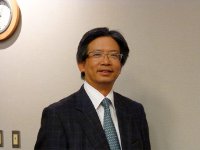 | | Asian Outreach president Francis Tsui |
IN recent years, British Columbia has become a popular destination for
immigrants from China. Resulting from this connection have been many business
transactions between our two countries.
As China’s economy continues to expand – with more people from villages moving to the city to get jobs – so too does the opportunity to create business deals.
But while working with a population of 1.3 billion people may appear to some as
the perfect money-making opportunity – and to others, the ideal place to start a ministry or non-profit organization – it is important to note that doing anything in China is tricky. It is a country
that does not follow the same rules as the Western world.
Asian Outreach and Power to Change teamed up May 20, to host a business dinner
and discussion forum dealing with ‘Business Strategies for a New China.’ The event was part of a two-day gathering called the China Summit, that brought
together different speakers to discuss China’s economic and spiritual impact on the world.
The speakers at the business dinner were Francis Tsui, president of Asian
Outreach International; and Brent Fulton, founder of China Source. They each
touched on the evolving ideologies of China – from a purely communist country, to what it is now: a socialist market economy
with some distinctive cultural traits.
“China is definitely not what we understand as a Western capitalist country,” said Tsui. Instead, he called it a “socialist market economy of Chinese characteristics.”
He described it as a fusion of planned and market economy. This is something
many in the Western world will undoubtedly have trouble understanding, Tsui
stressed.
“China has only one big boss,” said Tsui. “From the Communist Party’s point of view, it is about financial security. That is why, for those of us
doing business in China, it is important to know that China is still a family
business. The patriarch is the Communist Party – and you are not going to cross them.”
In China, public property is still number one in importance; private property,
the trademark of a capitalist country, is number two.
Tsui said the Chinese government indirectly owns most of the key businesses in
the country.
Although pursuing business in China may seem rather daunting for foreigners,
Tsui stated there is a simple way to go about starting a successful business in
China.
Continue article >>
|
He argued that a thriving business in China is dependent on how well a business
plan fits into the government’s five year plans.
Fulton described the Chinese leaders as “Engineers sitting in the control room of a power plant.” They do not necessarily have a long term ideological plan for China; they just
see problems, and try to fix them.
According to Fulton, the success of business in China is largely dependent on
the ability to be flexible; the ability to make money; and the ability to align
business strategies with the strategies of local officials, so as to make them
look good.
As an example, Fulton spoke of a woman in China who started a chocolate factory.
She specifically sought out former prostitutes as employees, and trained them
to make chocolate.
“In doing that, she not only makes great chocolates that are sold at hotels
across China. She contributes to society by giving these women another chance,” said Fulton.
Stewardship is an important part of doing business in China. The enterprises
Fulton saw as successful were not afraid to give away knowledge – or wealth. If there was a crisis, the ones who gave were rewarded; and the ones
who did not were blacklisted.
Pandering to the government’s wishes is important for businesses, as well as non-governmental and missions
organizations. In a place like China, good will activities are only seen as
good will if they fit into the country’s plans.
To those who are “kingdom minded,” Tsui’s advice was “to be a good business man first. If you don’t have a good business platform, don’t expect it to become a good mission platform. If we cannot even run a viable
business, and we think that will become a platform for mission, are we actually
compromising our message?”
Tsui’s goal, as the international head of Asian Outreach, is to change lives by
working with individuals; to transform communities by offering solutions to
their needs; and to influence nations through the empowerment and training of
national leaders.
By bringing the gospel to areas of China, Asian Outreach also hopes to better
the lives of individuals there – by upgrading the standard of living and addressing deeper issues.
“There is still a spiritual emptiness in Chinese people’s lives,” said Tsui.
Asian Outreach, he asserted, is focusing on a “holistic ministry.” Through Tsui’s leadership, Asian Outreach hopes to spread the gospel – but also to be a blessing to China by helping to fulfill the worthwhile aspects
of the country’s social agenda.
June 2010
|