By Peter T. Chattaway
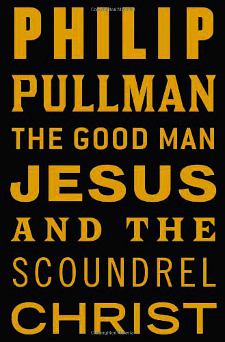 |
• Philip Pullman: The Good Man Jesus and the Scoundrel Christ, Knopf, 2010
PHILIP Pullman has written many stories over the years, but he is best-known for
‘His Dark Materials,’ an award-winning and best-selling trilogy in which children from different
universes become involved in a war against God. (The first and best book in the
series, The Golden Compass, was turned into a mediocre film three years ago.)
Pullman’s trilogy makes creative, if subversive, use of biblical and apocryphal imagery,
and it is relentlessly negative in its depiction of the church. But it is also
conspicuously silent on the subject of Jesus.
So the reader is left to wonder how, exactly, all this nasty Old Testament stuff
led to the equally nasty church in Pullman’s universe. Was Jesus himself nasty? Or did even Pullman think that might be
going a bit too far?
Pullman has hinted that he might get around to filling this gap in one of the
newer spin-off books related to his trilogy. But for now, readers curious to
know what Pullman thinks of Jesus will have to settle for The Good Man Jesus and the Scoundrel Christ, in which Pullman imagines that Jesus and Christ were two separate but related
people.
Given the book’s title, you might think Pullman is offering just another variation on the hoary
old notion that the historical Jesus was a great guy – but the Church twisted him into a mythological figure, and has used him to do
nothing but harm. And to be sure, Pullman’s sympathies do seem to point in that direction more often than not.
Continue article >>
|
Matters are complicated, though, by the fact that Pullman’s Jesus preaches a belief in the imminent end of the world that is still quite
religious, and presumably something Pullman wouldn’t identify with. It is only at the end, when Jesus is about to die and he seems
to lose his faith in God, that you really begin to hear Pullman speaking
through the character.
And when Christ, who has been writing the gospels without Jesus’ knowledge, looks forward to the rise of the church, he does think at least a
little about the good social work and the fantastic art that will be inspired
by the story he chooses to tell about Jesus.
Pullman’s own writing, however, is somewhat muddled; his style is certainly readable,
but his choices seem rather arbitrary at times.
For example, do miracles really happen in Pullman’s story, and do angels really appear to people, or is it all just mistaken
identity and rumours that get out of hand? The answer seems to vary from
chapter to chapter.
If Pullman has any consistent modus operandi, it seems to be to do whatever
would annoy religious readers the most.
Weakest of all, he invents an anonymous character – might be a demon, might be a man – who tricks Christ into betraying Jesus and then invents the resurrection by
stealing the body of Jesus. It isn’t history, and it isn’t particularly good or compelling fiction, either.
In the end, for all his talents, Pullman’s just another atheist preaching to the choir.
Philip Pullman’s book will be the topic of discussion at the next Kindlings Muse, a podcast
hosted by Gracepoint Community Church pastor Bill Hogg and recorded live at
Belle’s restaurant in Surrey June 28. See thekindlings.ca for details.
June 2010
|