|
HOLLYWOOD studios are increasingly aware there is a
market for religious films.
So lately, they have been making a point of creating
special video labels, such as Fox Faith, and reissuing classic religious
films – in addition to newer efforts. Here are a few such films.
• A Man Called Peter, Fox, 1955
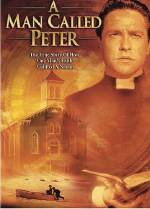 There is a big, big problem with the cover of this DVD:
it shows Peter Marshall (Richard Todd) wearing a suspiciously large
clerical collar, even though the film makes a big, big deal of the fact
that Marshall – a popular Scottish Presbyterian minister who became
chaplain to the United States Senate – was a spirited nonconformist
who refused to wear such things. There is a big, big problem with the cover of this DVD:
it shows Peter Marshall (Richard Todd) wearing a suspiciously large
clerical collar, even though the film makes a big, big deal of the fact
that Marshall – a popular Scottish Presbyterian minister who became
chaplain to the United States Senate – was a spirited nonconformist
who refused to wear such things.
But never mind the cover; this is easily one of the
best religious films to ever come out of the Hollywood studios, and
it’s definitely worth a look.
Based on a book by Peter’s wife Catherine (Jean
Peters), the bulk of the film takes place in the 1930s and 1940s. But it
reflects the heightened religiosity and the fusion of faith and politics
during the Eisenhower era, as well. (It was in 1956 that the phrase
‘In God We Trust’ became mandatory on all U.S. currency.)
Todd delivers several sermons over the course of the
film, and he recites them all with gusto, charm, wit and conviction. Even
better, the DVD includes an audio recording of a half-hour Easter sermon
delivered by the real Peter Marshall. Now that’s a bonus feature.
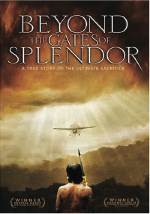 • Beyond the Gates of
Splendor, Fox, 2002 • Beyond the Gates of
Splendor, Fox, 2002
• End of the Spear, Fox, 2005
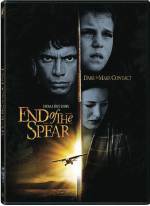 The former film is a documentary, and the latter is a
dramatization. Both films tell the story of Nate Saint, Jim Elliot and the
other missionaries who were martyred in Ecuador in 1956, and how their
families were eventually reconciled to the natives who killed them. The former film is a documentary, and the latter is a
dramatization. Both films tell the story of Nate Saint, Jim Elliot and the
other missionaries who were martyred in Ecuador in 1956, and how their
families were eventually reconciled to the natives who killed them.
Continue article >>
|
Both features were directed by Jim Hanon, but they are
remarkably different in style and tone. The documentary includes home-movie
footage shot by the missionaries, in which the native Ecuadorians appear
partly nude, but the dramatization keeps these characters dressed extremely
modestly.
And while the documentary uses 50s and 70s
rock’n’roll to capture the mood of the various eras, the drama
sticks to 1930s jazz and classic opera.
Both films are quite moving, especially the
documentary, but the differences in style – despite the fact that
both films were made by essentially the same people – raise some
interesting questions about the cultural and aesthetic expectations we
bring to the films we watch.
• St. Peter,
Lionsgate, 2005
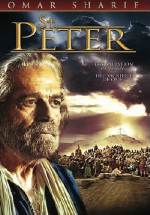 Many films are based on the gospels, but not that many
are based on the Book of Acts. So the first half of this two-part TV-movie,
which covers the resurrection appearances of Jesus and Peter’s role
in the Jerusalem church, is inherently interesting. Many films are based on the gospels, but not that many
are based on the Book of Acts. So the first half of this two-part TV-movie,
which covers the resurrection appearances of Jesus and Peter’s role
in the Jerusalem church, is inherently interesting.
The second half, which jumps ahead to Nero’s Rome
and an entirely fictitious series of events leading up to Peter’s
martyrdom, is essentially a rehash of Quo Vadis?, but it has its merits, too.
Anyone who has read their Bible will quibble with the
film’s handling of some scenes; and even though the story spans more
than 30 years, Omar Sharif, who is well into his 70s, plays both the young
Peter and the old Peter; so you have to suspend your disbelief a bit more
than usual in the earlier part of the film.
But there is no denying the sensitivity of his
performance, as he plays a man humbled by the realization that, “if
Jesus has continued to love me in spite of all the mistakes that I have
made, then no man must feel unworthy of his love.”
July 2007
|