|
By Steve Weatherbe
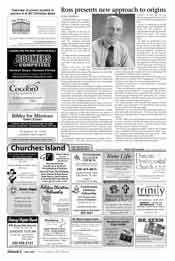
ASTRONOMER and apologist Hugh Ross returned to Canada in early June to talk
about his daring new approach to the science-religion debate.
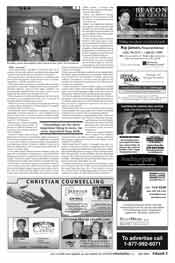
Ross, founder of Reasons to Believe (RTB), spoke at a creation conference at New
Life Community Baptist Church in Duncan, with his colleague Kenneth Samples.
Their thesis: that the Bible contains an entirely accurate, scientific
description of the origins of the universe, the earth and life itself.
At stake, said Ross, is how people will answer the big questions: “Who are we? Why are we here? And what is the purpose of my life?”
What’s new about the RTB approach is that it restates the creation model for the
origins of the universe in a form that Ross said can be tested scientifically.
In effect, his team has broken down the creation model – and available scientific knowledge about the origins and history of the
physical world and life upon it – into literally hundreds of areas of knowledge.
The RTB model leaves out Intelligent Design because, Ross argued, that theory
avoids committing itself to any version of the universe’s origins or development, and therefore is not testable. Nonetheless, the RTB
model actually presents many facts – for example, on the formation of the solar system and composition of stars and
planets – that are used as evidence by the Intelligent Design camp.
Crucial to RTB’s understanding of the origin of species is that God created each successive
life form for a unique purpose and a unique habitat, already perfected.
What evolutionists claim to be transitional forms – animals part way along an evolutionary path from one species to another – RTB sees as fully realized life forms adapted to a habitat that might be
considered transitional.
A 47 million year old lemur-like creature nicknamed Ida, whose discovery was
announced late in May, was ballyhooed as a transitional form – because it could both jump and climb.
But Ross said it was created by God “as-is,” to fit into a transitional vegetation belt between grasslands and rainforest.
Similarly, the crab, he said, is not a half-way evolution between fish and land
creatures; it is perfectly designed for the intertidal zone.
“I rejected the evolutionary explanation by the age of nine,” admitted Ross. “The earth was too young for it to have worked.” At that age, he was already doing experiments to find the best weather for
building snow forts.
At age 17, reading up on the Big Bang Theory of an instantaneous origin for the
universe, he concluded there had to be an entity behind the deed – but wasn’t prepared to believe in a personal deity.
So while an undergrad at the University of BC, he spent two hours a day for 20
months, reading the foundational scriptures of the great religions – looking for contradictions. In the Genesis account of creation, he found an explanation for one of the puzzles of evolutionary
account: why, after the appearance of human beings 50,000 years ago, were there
no new species of life forms evolving?
Continue article >>
|
The answer was that God was creating increasingly complex life forms, climaxing
with humankind. “Then he rested,” said Ross.
New Life Pastor Mark Buchanan told BCCN he was led to bring Ross by a member of his congregation. “So I let him do all the heavy lifting in terms of getting him here.”
Buchanan wanted Ross to come particularly to help the church’s young people.
“There’s an enormous exodus from the evangelical churches, of young people from the 18 – 23 year range. They go off to university or college, and are unprepared by
Sunday school for what they get in Biology 101 or Astronomy 101 – in terms of the naturalistic world view. So this was a way to give them some
tools to integrate faith and science.”
The usual number of 650 attended the church’s Sunday morning service with Ross; 350 attended the first evening lecture, and
300 the following night.
Buchanan was “very pleased” with the Ross presentation, both personally and pastorally. “He helped me integrate some of my thinking about science and my faith that was
patchy.”
As well, “there were some people who were kind of coaxed to come – and who had left the church because they had problems with faith and science – and now could see that faith and science could be reconciled.”
The church’s young people didn’t come to the evening events – probably, said Buchanan, because Ross is fairly “cerebral,” and packs a lot of information into a short time. “They had probably heard as much as they needed.”
Buchanan said the church may follow up with a three-day conference next year,
addressing science and faith.
July 2009
|