|
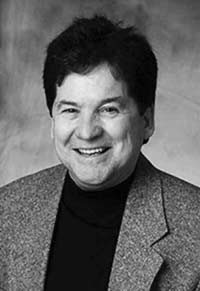 | | Sociologist Reginal Bibby |
Reginald Bibby, University
of Lethbridge sociologist, recently released the results of a poll (see
page 9) indicating that Canadians with faith in God value virtues such as
forgiveness significantly more than do avowed atheists. He elaborates on
the subject in this exclusive interview.
BCCN: Did the findings
surprise you, particularly on the questions where there was a wide gap?
Reginald Bibby: Yes. I
initially expected the differences to be slight and perhaps inconsistent in
the sense there would be no clear pattern. That was what was striking about
the findings; they were consistent.
BCCN: The National Post story on your
findings quoted atheist Justin Trottier saying the survey only demonstrates
a verbal agreement with these values, but that the real question is the
extent to which theists and atheists actually practice the values. Do you
have any evidence on practice?
RB: Practice isn’t
even the issue here. What we are looking at is aspirations re interpersonal
life. The assumption I make is that for behaviour to take place, the
aspirations or values have to be in place. Obviously, not everyone will
come through. But holding the values seems to be an important and even
indispensable condition for positive interpersonal behaviour.
BCCN: Trottier also said
atheists would have ranked higher if you had asked about values such as
critical thinking. Does this just prove your point that theists hold
different values?
RB: I wasn’t probing
that in the data release. We have data on a number of other values,
including being rational.
BCCN: You told the National Post that even when
non-believers highly value morality, it is often a lingering legacy from
previous generations which held deeper religious views.
The farther one gets from ‘grandma,’ the
less likely future generations will maintain those values. What will happen
when grandma dies? Will future generations lose the lingering effect of
virtues?
Continue article >>
|
RB: We won’t know for
a while. But obviously, there need to be some new sources of such values in
place shortly in order for the influence to persist. [grandma’s]
influence is dissipating, and the car is getting low on fuel.
The parents and grandparents who were active through
the 1960s are getting old or are already gone.
BCCN: Is there any hope of reversing the trends? Is there any
viable alternative to religious groups for the teaching of these values?
RB: Outside of religious
groups, we are hard-pressed to know who is able and willing to step
forward. So-called functional alternatives are extremely scarce.
BCCN: You are a
sociological researcher, an academic. Does it concern you that Christians
have claimed you as one of their own, as a sharer and promoter of their
values?
RB: Not at all. Christian
faith is very important to me. I do my work as a sociologist who aspires to
have professional integrity. But faith is and always has been an important
part of who I am.
BCCN: A letter to the
editor in one of the newspapers evidently said that strong believers in
religion also support war and intolerance of gays. How do those things
square with the values believers say they hold?
RB: God believers obviously
have varied attitudes on any number of special social and moral issues.
Nonetheless, the inclination for them to value social compassion . . . is
greater than that found among atheists. One has to remember that social
compassion is clearly expressed in highly diverse ways.
BCCN: The survey lumps all
religions together. Is this valid? Could there be minority religions that
do not teach forgiveness, for instance?
RB: The analysis is simply
reporting the total figures for theists and atheists, and reporting on the
overall patterns.
Clearly there are subgroup variations. But that is a
question for another day and another analysis.
November 2007
|










