|
By Len Hjalmarson
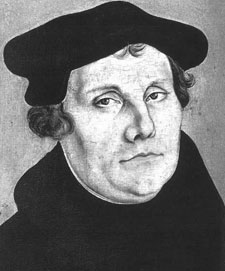
| | Reformation instigator Martin Luther |
WHAT did the church in Acts 2 have that we don’t?
Total participation.
Some years ago, Open Church Ministries ran a two page
ad for their Interactive Body Life Seminar. It opened thus:
“Sorry about your church! We hear it’s
closed.”
Most churches, it went on, “are indeed closed to
active participation on Sunday morning. Members are not allowed to speak
even when God puts something special on their hearts to say.”
The ad then made a dramatic claim: “We’re
seeing the final step in the Reformation process that began with Luther,
but quickly froze in midstream.” This is a claim worth examining. Is
God indeed releasing a new reformation in his church?
Luther’s time
In Luther’s time, grace and salvation were
understood to come only through an ordained priesthood. Suddenly a biblical
understanding was recovered. Salvation was available to all, directly from
God, apart from any human mediator.
And salvation was by faith, the work being done by God
himself and received as a free gift to all who believe.
For a time, it looked as though a biblical priesthood
was recovered. Sadly, this was not the case, and the difference between
clergy and layman remained. There were things that the priest/pastor could
do that the ordinary Christian could not do, even though these were
narrowed to communion and the sermon.
The word of the Lord still came through the
pastor/priest, and the people of God remained largely inactive in their
pews (with the exception of participation in praise).
Pentecost
Almost 3,000 years before the Reformation, Moses had
declared: “Would that all God’s people were prophets!”
(Numbers 11:29) In Acts chapter 2, his dream became reality at Pentecost
– when the Spirit of God descended on the disciples, and all began to
speak forth words given by God.
No longer would prophets be a narrow class of people to
whom God would speak; all could hear directly from him and speak out his
word. As Jesus had said in John 10, “My sheep” (not only
shepherds!) “hear my voice.”
In the churches under Paul’s leadership, this
reality reached expression. Paul is clear that when the people are gathered
together, everyone should participate. How? Like this:
“When you come together, each one has a hymn or a
word of instruction, a revelation, a tongue or an interpretation. All of
these must be done for the strengthening of the church.” (1
Corinthians 14:26)
The revolutionary truth pictured in the gathering at
Corinth in the 1st century is that the word of God can and will come
through every member of the body of Christ.
Likely that word will not only sound different, but
look different, through every expression. For example, a word of
encouragement may come through someone quoting scripture. Someone else may
want to sing a song they have written. Still another may want to deliver a
slide show. Another may design a banner. Someone else may dance. Still
another may deliver a spontaneous sermon around a biblical theme.
Leadership challenge
As leaders we are accustomed to control. If God is in
control, what are we
to do? We thought that was our job. If just anyone can bring a word in our services, where
does that leave our sermon? We are accustomed to being valued for our
highly visible giftings. Will the church still need us?
We must remind ourselves our task is not to do the work, but to equip
others to serve. We need to recover Ephesians 4:16, where the body is built
“as each part does its work.” Sometimes this even means the
preacher will preach!
Second, leaders fear disorder. We might say it
isn’t the action of God’s Spirit that we are worried about, but
rather the response of his people. What will they do with so much freedom?
Many leaders would argue their people are simply not ready for this. They
might say the people need more training, or more character.
The problem is that if we wait until everyone is ready
and its perfectly safe before releasing people for ministry, Jesus will
have returned and the world will still be in darkness. Yet it is true that
some need training, and all need guidelines.
The core task of leadership is discernment. Even in the
disorder of Corinth, Paul can say, “Do not despise prophesying and do
not forbid speaking in tongues.”
Let’s face it, most of us prefer an order of
service where we know exactly what will happen next. We are creatures of
habit. What is familiar feels safe.
Unfortunately, as the old aphorism points out, “A
ship in a harbour is safe, but that is not what ships are built for.”
We need to examine our hearts honestly: do we want the same bread every
week, or do we want the Lord?
Professionals
Professionalism has crept into our churches. “Let
the professional do it.” Both people and pastors may think this way.
Once we have the training, we feel that we are not honouring God or our
people unless we exercise our gifting to bless the body. Where fishermen
were preachers and teachers and apostles in the 1st century, now we must
have degrees.
Continue article >>
|
The equipping environment, where the message of a
fisherman could carry as much weight as the seminary graduate, has been
destroyed. It is the task of leaders to release and empower the word to
come through every member of the body. Think what an impact we will make on
the world when we can recognize the preaching anointing on Marge the
secretary and George the printer!
Professionalism also means we insist on looking and
sounding respectable. We want the sermon neatly laid out, with logical flow
and three points that rhyme. If we insist on this being the highest goal,
we will achieve it.
We may have wonderful sounding sermons, but will they
touch the heart? What will we lose in the process? For one, we lose the
ability of the blue collar worker to speak with understanding to those like
him.
New building
At one time, I was part of a small charismatic
congregation. The day came when we were ready to shift from the school gym
to the new building. We were excited! After all, the Lord had blessed us
with wealth, resources and many conversions. We recognized his provision in
a multi-use building in a growing suburb.
Sadly, something happened in the translation.
Spontaneity and vulnerability both seemed to pack their bags and leave. The
pastor wore a suit more often, as did others. We noticed an influx of young
professionals, most of whose experience was in the traditional church
setting with its professional model of ministry by the few to the many.
Fewer and fewer meetings were marked by participation
from the congregation. Eventually those who were most dissatisfied by the
changes found other groups to call home. We had moved from the reality of
every member ministry to a more centralized and professional model. What
happened?
Sunday meetings became the focus of the week. Where
previously we had little money and not much more time invested in our
corporate gathering, the shift to our own building and space had an
unexpected weight in our psyches.
We now had to ‘do it right.’ We had a
mortgage to pay. We needed professionals to speak, and trained leaders to
teach. We still paid lip service to ‘every member’ ministry,
but the reality had died away.
In the end, we went from a humble amateur hour –
where peoples lives were touched continually, and anyone could bring an
exhortation – to a group focused on pleasing man, and appearing
respectable in the larger community.
Vulnerability waned; after all, we didn’t know
the person sitting next to us anymore. And besides, having someone share
their heart and break down in tears wasn’t . . . well, professional.
We gained respect in our community, but we lost the ability to reach to the
heart.
We drifted into a program-centred model. After all, we
needed something to give our lives meaning! Our relationships to God and
one another could no longer fill the need. Our corporate life became
focused around greasing the wheels. After 10 years, the life of the Spirit
had all but bled out of us.
Release
Christians are in the throes of a new reformation, and
it is toward a practical release of the people of God, each of us as a
priest of the Lord. How should leaders respond?
Give opportunities, for those who evidence hearts of
servants, to preach and teach. They won’t perform like professionals,
but you will be creating an environment where others will then feel free to
participate. Offer encouragement to the brave souls who risk up-front
public ministry.
Allow time during worship for prophetic ministry to
arise from the body. Affirm the words that flow with what God is doing;
withhold judgment when uncertain, and bring correction when necessary.
Encourage creative participation – dance, drama and banners.
Give instruments to gifted people. Not only will you be training future
worship people, you will be releasing all to respond to God.
Expect participation. If you don’t expect it, it
may not happen. Step out and take risks. Churches that stop taking risks
slowly wither and die.
Wholeness
Get a vision for the wholeness of the body. Resist
importing popular programs or ideas if they do not have a natural
‘fit’ for the work God is doing in your midst.
Allow ministry and vision to arise from the roots.
Vision which comes from the top down absorbs all the energy of the
leadership just to maintain.
As the Spirit leads, break the large gathering into
groups which can minister to one another in prayer. It may seem chaotic at
first, but you can create openness to small group ministry among people who
may never have experienced it.
Finally, connect each part of the body directly to the
Head. It’s time leaders quit delegating ministry, and simply plug in
the people. When the ordinary person in the pew becomes intimate with
Jesus, stuff happens!
God desires intimacy with all his people: to know, love and empower them. He is
recreating a prophetic people, where housewives, mechanics and garbage
collectors will hear and speak his words. In the first two centuries AD,
the church spread like wildfire, apart from buildings and programs, because
all God’s people carried the good news.
The Lord himself will bring change to our church
structures. Meanwhile, get ready for the coming Reformation: the liberation
of body life – in the power of the Spirit!
Len Hjalmarson is a Kelowna writer and software
developer. A longer version of this article is at NextReformation.com.
November 2007
|