|
By Jim Coggins
 A FEDERAL bill requiring all voters – including
Muslim women – to uncover their faces before they vote is a lot of
hype over nothing, and may reflect an increasingly bigoted approach to
visible signs of religious faith, according to one prominent Muslim. A FEDERAL bill requiring all voters – including
Muslim women – to uncover their faces before they vote is a lot of
hype over nothing, and may reflect an increasingly bigoted approach to
visible signs of religious faith, according to one prominent Muslim.
Sameer Zuberi, a spokesman for the Canadian branch of
the Council on American-Islamic Relations, told BCCN
the bill, introduced by the Harper government
October 26, will apply to only “a few dozen women in the
country” and devotes a lot of attention to an issue which
“isn’t that important.”
However, he added that the issue, in the context of
Quebec’s ‘reasonable accommodation’ debate, raises
serious questions about “how we treat cultural and religious
minorities.”
The new bill is an amendment to Bill C-31, which was
passed earlier this year “to improve the integrity of the voting
process.”
To guard against electoral fraud, the bill required
voters to show a piece of government-issued ID, such as a driver’s
license. Recognizing that some people do not have such documents, the law
provided two alternatives: the voter could produce two pieces of non-photo
ID, or could swear an oath and be vouched for by another voter.
The legislation requires that before an election, the
Chief Electoral Officer define the kinds of alternative identification that
will be acceptable. Accordingly, just before the September 17 by-elections
in Quebec, Chief Electoral Officer Marc Mayrand announced a list of
acceptable documents.
Continue article >>
|
He also announced that voters, such as veiled Muslim
women, would not be required to show their faces since alternative means of
identification were available.
The Harper government argued that this decision was
illogical, since it undercut the whole purpose of the legislation –
which was to strengthen the identification process. There would be no
point, they argued, in providing photo ID if the voter’s face was
covered.
The issue received even more attention when a number of
voters turned up to vote in the by-elections wearing a variety of masks and
face coverings. One turned up with a pumpkin over his head. The government
concluded the issue was damaging the credibility of the electoral process.
After the by-elections, a parliamentary committee
ordered Mayrand to reverse his ruling. He refused, stating that his ruling
was based on the current law, which does allow alternatives, and that if
Parliament was unhappy with that, it should amend the law.
Zuberi asked why the government is wasting time on this
when there are more important issues. No religious groups, he noted, have
objected to the proposed amendment.
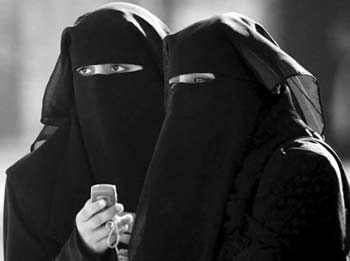
There are “very few women” in Canada, said
Zuberi, who wear the niqab, a veil that covers the entire face except for
the eyes. He added that Muslim women are “willing to uncover for
legitimate identification purposes.”
Zuberi also said he appreciated the provision in the
new amendment which allows Muslim women to uncover their faces behind a
screen to a female voting official.
He maintained this would not have been an issue were it
not for the ‘reasonable accommodation’ discussion in Quebec,
which he believes has become “a very bigoted debate.”
December 2007
|










