|
By Jim Coggins
THE DIVISION in the Anglican Church of Canada (ACC)
became a formal reality at the end of November, when theological
conservatives set up an alternative church structure. The structure was
confirmed at a conference convened November 22 – 23 by the Anglican
Network in Canada (ANiC) in Burlington, Ontario.
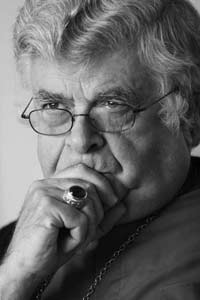 | |
| Bishop Donald Harvey |
Donald Harvey, who has been serving as volunteer
moderator of the ANiC since he retired as bishop of Eastern Newfoundland
and Labrador three years ago, will lead the new body. Harvey officially
resigned from the ACC November 15 in order to be accepted as a bishop with
the Southern Cone (South American) province of the worldwide Anglican
communion. He will be under the authority of Gregory Venables, Archbishop
of the Southern Cone.
A second retired bishop, Malcolm Harding, formerly of
the Manitoba diocese of Brandon, said November 22 that he also has become a
bishop in the Southern Cone.
The Council of the General Synod of the Anglican Church
of Canada, meeting in Mississauga, Ontario, November 16 – 18, issued
a statement saying Harvey’s resignation was “a source of
sadness.” The statement also said the plans of the Southern Cone
province to “intervene” in Canada are illegitimate,
“inappropriate and unwelcome . . . not a valid expression of
Anglicanism and . . . in contravention of the ancient and continuing
traditions of the church.”
Fred Hiltz, newly elected moderator of the Anglican
Church of Canada, told the council that Harvey no longer has authority to
minister in Canada.
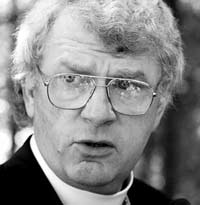 | |
| Bishop Michael Ingham |
Michael Ingham, controversial bishop of the Diocese of
New Westminster, told the Anglican Journal November 17 that the denomination is in
“full-blown schism.”
The ACC claims 2,800 parishes and 600,000 members
across Canada, but has not collected membership data since 2001 –
and, in the words of the ANiC, is “in seemingly irreversible
demographic and financial decline.” Some disaffected parishes have
stopped contributing to the denomination. The 2008 national church budget
is predicting a $1.3 million deficit (on expenditures of $10.2 million),
although the deficit will be covered by an expected $4 million bequest.
The roots of the schism go back to 2002, when the
Diocese of New Westminster approved the blessing of same-sex unions. Some
parishes left that diocese in protest. These parishes formed the Anglican
Coalition in Canada (ACiC) and in 2003 came under the authority of the
Archbishop of Rwanda. There are now 12 churches in this group.
Others unhappy with the decision formed the Anglican
Network in Canada; they chose to stay in the ACC and work for change, but
some have now separated.
Meanwhile the Primates Council – the archbishops
leading the world’s 38 Anglican provinces – have
repeatedly told the ACC and The Episcopal Church (TEC) in the U.S. to cease
supporting various pro-homosexuality initiatives. Those calls have largely
gone unheeded.
Harvey told BCCN that, when the ACC’s General Synod passed a
resolution last June saying the blessing of same-sex unions is not in
conflict with core doctrine, “I knew the game was over as far as
reforming the ACC is concerned.”
The ANiC has established a seven-person executive and a
budget of $130,000 to carry the organization until March 1, when a full
denominational structure will be in place. That structure will start with
an annual budget of $750,000, and its first General Synod will be held next
November.
Continue article >>
|
A celebratory event marking the beginning the new
structure will be held in the Vancouver area April 25 – 27.
The ANiC is asking the ACC for 90 days of grace in
which parishes can consider the issues and choose whether to join the ANiC.
One complicating factor is that most church buildings
and other financial assets are held in the name of a diocese. Parishes in
the ACiC had to leave their buildings behind when they left the ACC; the
same may be true of parishes which accept the ANiC option. However, the
ANiC says it has “a very good legal case to make.” It has
assembled a volunteer legal team and a $1 million legal defence fund.
David Short is rector of St. John’s Shaughnessy
Church in Vancouver, one of four parishes still in the Diocese of New
Westminster which has not paid dues to the ACC since 2002. Short’s
parish has not made a decision on its future, although Short is a member of
the ANiC executive.
Short told BCCN: “Our view is that we haven’t moved anywhere,
but that the Diocese of New Westminster and the ACC are moving away from
the Anglican communion and biblical teaching.”
He said the parishes which choose to accept the ANiC
option “are willing to defend our properties.” However, his
“great hope” is that the parishes will be able to reach an
“amicable agreement” with the ACC. “We don’t want
to do anything that would harm the reputation of Christ.”
Clergy who leave will also lose their pension plan and
other benefits, although part of the pensions are protected; the ANiC plans
to have an alternative benefits package in place by March 1.
Bishop Ingham said the ACC can tolerate a wide variety
of theological opinions – but cannot tolerate schism, the setting up
an alternative church.
However, renowned theologian James I. Packer told the
ANiC conference that schism, defined as unwarranted separation, “is
always a sin, but realignment may become a duty.” He told a National Post reporter,
“Those who are unfaithful to the heritage are the schismatics. It is
not we who are the schismatics."
Ed Hird, a leader in the ACiC, concurred, blaming the
schism on the church leaders who chose to change Anglican doctrine:
“Heresy and immorality always break church unity.”
With the ANiC under the jurisdiction of the Southern
Cone, and the ACiC and other conservative North American groups under
various African jurisdictions, there is some confusion.
Short said these arrangements are “a temporary
interim measure so we can move ahead with ministry while the global
communion continues to deal with this issue.”
The ACiC and the ANiC and eight other groups have
joined together in the Common Cause Partnership, which met in Pittsburgh at
the end of September and agreed to work toward some sort of joint
organization over the next 15 months.
The hope is that the Common Cause partners will form a
“parallel province” recognized by the worldwide Anglican
communion. Some speculate that, if the ACC and TEC continue to defy the
Anglican communion on issues such as same-sex blessings, the new province
may become a “replacement province,” with the ACC and TEC
expelled from the worldwide communion.
December 2007
|