|
 The
notion of rock music as a bono-fide art form first came about during
the mid-to-late sixties. After a decade of being treated as little
more than pop fodder, suddenly musicians were deemed every bit the
equal of the writers that had shaped western social mores in the
first half of the century.
The
notion of rock music as a bono-fide art form first came about during
the mid-to-late sixties. After a decade of being treated as little
more than pop fodder, suddenly musicians were deemed every bit the
equal of the writers that had shaped western social mores in the
first half of the century.
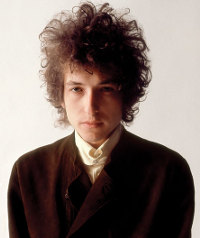
A recent
spate of reissues and previously unreleased vintage material from Bob
Dylan and Leonard Cohen offers proof that, while not every kid who
picked up a guitar created lasting art, the change in perception was
warranted.
Few
catalogues can rival Dylan’s remarkable series of LPs released
in the 1960s.The Beatles and Rolling Stones come closest, but they
were collective efforts; you’d have to go back to Elvis to find
a single individual who shook things up to a comparable extent.
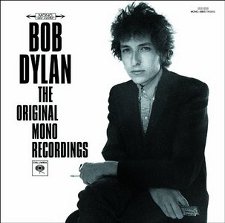 The
Original Mono Recordings spans eight albums over seven years,
from his self-titled debut in 1962 through to John Wesley Harding,
released in late ’67, shortly before stereo supplanted mono as
the de facto format. The
Original Mono Recordings spans eight albums over seven years,
from his self-titled debut in 1962 through to John Wesley Harding,
released in late ’67, shortly before stereo supplanted mono as
the de facto format.
Mono was the
format in which the public first heard these records; both on radio
and vinyl. For one, it was cheaper - stereo LPs cost a dollar more.
Stereo mixes were for the most part afterthought, usually rushed off
after proper care had been taken on the more important monaural
mixes.
Invariably,
there’s a heightened, an almost in-your-face directness,
whether on the early material - the notion of guitar, harmonica and
voice needing more than a single speaker seems contradictory; a
surround sound version of one man – but it continues through
onto the electric material.
The rapid
evolution from Woody Guthrie-inspired folkie, through bohemian beat
poet, to rocker and then back to the basics - all in well under a
decade – was, and remains, unprecedented. Dylan was constantly
on the move, abandoning whatever movement tried to make him their
own.
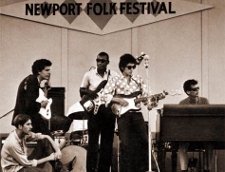 | | Bob Dylan at the 1965 Newport Folk Festival |
When he
plugged in, it was a cataclysmic, life-changing event for many fans.
His electric set at the Newport Folk Festival in the summer of ‘65
provoked reactions reminiscent of Stravinsky’s debut of Rite
of Spring in a Paris theatre in 1913. Listeners were forced to
take sides; Pete Seeger tried to cut the power lines with an axe,
while at a concert in England soon after, an outraged audience
member, feeling betrayed, famously shouted ‘Judas!’
More that 45
years on, the performances – acoustic and electric –
easily transcend their era. Memorable lines tumble out; ‘To
live outside the law one must be honest,’ ‘Don’t
criticize what you can’t understand,’ ‘He not busy
being born is busy dying.’ This was not your mother’s pop
music.
While it
wasn’t until the following decade that Dylan announced –
very publically – that he had become a Bible-believing
Christian, it’s easy to spot the thread that leads there.
Poet Allen
Ginsberg, after initially ignoring him, claimed of Dylan’s
talent; “It’s sort of a Biblical prophecy.” Mavis
Staples noted, “They were inspirational songs. And they would
inspire. It’s the same a gospel; he was writing truth.”
 His longtime
producer Bob Johnston put it more bluntly; “I don’t think
Dylan had a lot to do with it. I think God instead of touching him on
the shoulder, he kicked him in the ass; really. And that’s
where all that came from…I mean, he’s got the Holy
Spirit about him. You can look at him and tell that.” His longtime
producer Bob Johnston put it more bluntly; “I don’t think
Dylan had a lot to do with it. I think God instead of touching him on
the shoulder, he kicked him in the ass; really. And that’s
where all that came from…I mean, he’s got the Holy
Spirit about him. You can look at him and tell that.”
Dylan spent
the bulk of his career an intensely private person. That’s all
changed; these days, in addition to hosting a well-received radio
show, he’s published the first volume of his autobiography, and
opened up on his personal life in the film No Direction Home.
Ironically, in removing the mystery, he’s simply confirmed the
genius.
Continue article >>
|
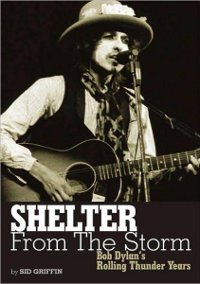 One of the
most fascinating chapters in Dylan’s lengthy career is the
1975-6 Rolling Thunder Revue. Sid Griffith’s Shelter From
the Storm offers an in-depth account of the era, which featured a
rag-tag group of fellow travelers crisscrossing the country on an old
bus, stopping along the way to play once-in-a-lifetime shows. One of the
most fascinating chapters in Dylan’s lengthy career is the
1975-6 Rolling Thunder Revue. Sid Griffith’s Shelter From
the Storm offers an in-depth account of the era, which featured a
rag-tag group of fellow travelers crisscrossing the country on an old
bus, stopping along the way to play once-in-a-lifetime shows.
The talent on
board was considerable; Joan Baez, Allen Ginsberg, Ramblin’
Jack Elliot, Joni Mitchell, Roger McGuinn and more. A number of
careers were launched during the tour, including T Bone Burnett,
Steven Soles and David Mansfield, who formed the Alpha Band
immediately after.
In addition
to the live shows, Dylan cast many of the players in his first foray
into moviemaking, the four hour plus Renaldo And Clara. Still
one of his most misunderstood efforts, Griffith manages to place the
film in context, making it fresh for reevaluation.
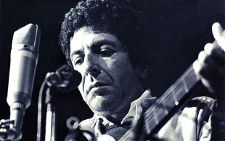 Leonard
Cohen came to music already established as a successful poet and
writer. His debut LP, 1967’s Songs of Leonard Cohen was
met with critical raves and placed him into the upper echelons of the
music scene almost overnight. Bird on A Wire offers an
close-up view of the man on tour, five years into his career as a
performer. Leonard
Cohen came to music already established as a successful poet and
writer. His debut LP, 1967’s Songs of Leonard Cohen was
met with critical raves and placed him into the upper echelons of the
music scene almost overnight. Bird on A Wire offers an
close-up view of the man on tour, five years into his career as a
performer.
The bond
between artist and audience - and how profoundly each affects the
other – has rarely been so clearly displayed. Director Tony
Palmer (All You Need Is Love) followed Cohen on a 20-city tour
across Europe in the spring of 1972. He was only three albums into
his recording career at the time, but all three – Songs of
Leonard Cohen, Songs From A Room and Songs Of Love and
Hate are classics.
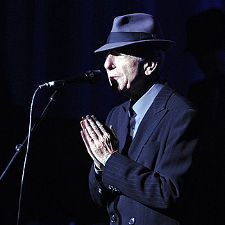 The latter,
and then most recent, was arguably even more emotionally raw than
what had come before. That’s reflected throughout the film. A
tangible sense of vulnerability comes across repeatedly onstage and
off. Whether dealing with security personnel attacking audience
members, or a faulty sound system wreaking havoc, there’s an
underlying sense of tension. In the latter case, audience members
demand refunds, and as tempers boil over, Cohen offers up his own
pocket cash. The latter,
and then most recent, was arguably even more emotionally raw than
what had come before. That’s reflected throughout the film. A
tangible sense of vulnerability comes across repeatedly onstage and
off. Whether dealing with security personnel attacking audience
members, or a faulty sound system wreaking havoc, there’s an
underlying sense of tension. In the latter case, audience members
demand refunds, and as tempers boil over, Cohen offers up his own
pocket cash.
The final
show in Tel Aviv leaves all involved emotional wrecks. An overcome
Cohen simply stops mid-show, refusing to continue. Negotiations -
including the audience collectively offering to sing the songs
themselves – eventually lead to his return.
As
fascinating as these side trips are, they’re distractions; the
real focus is the music, which is sublime. Cohen manages to connect
with the audience on a level rarely achieved by more seasoned
performers.
Yet there’s
an incongruity; he appears at once deeply involved in the process,
describing performing as a “holy experience,” and
conversely, ready and willing to walk away from it all. The fact he
has repeatedly done just that – including spending five years
at a Buddhist monastery - shows he really could step away from the
spotlight.
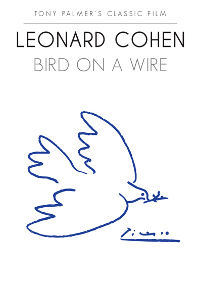 Bird On A
Wire is one of the most fascinating tour documents ever made, yet
until recently, few had even seen it. After an abbreviated theatrical
run, the film remained unseen for almost 4 decades. The DVD release
marks it’s commercial debut on any format. Bird On A
Wire is one of the most fascinating tour documents ever made, yet
until recently, few had even seen it. After an abbreviated theatrical
run, the film remained unseen for almost 4 decades. The DVD release
marks it’s commercial debut on any format.
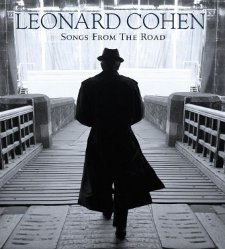
Songs From
the Road opens with Cohen, age 75, onstage in Tel Aviv in 2009.
It’s one of a dozen performances taken from his 2008/9 tour -
his first in 15 years – which ran for two full years.
 Despite the
35 year gap, there are consistencies; songs of love, mortality,
transcendence and Biblical themes abound. As well, the back-up
musicians Cohen employs are invariably impressive; there’s an
almost telepathic support that enhances the readings in every case. Despite the
35 year gap, there are consistencies; songs of love, mortality,
transcendence and Biblical themes abound. As well, the back-up
musicians Cohen employs are invariably impressive; there’s an
almost telepathic support that enhances the readings in every case.
December 2010
|