|
By Grace Fox
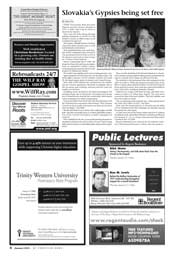
WHEN missionaries Brad and Karla Thiessen moved to Kosice, Slovakia in 1991, it
didn’t take long for them to discover the Gypsies.
They were the folks sifting through garbage dumpsters in search of scrap metals
to recycle or edible wastes to sell to farmers for pig food.
The Gypsies, officially known as Romas, came from India centuries ago, to work
as blacksmiths and artisans.
They established their own social structure which communism later destroyed. The
government forced them to live in the ghettoes and work as street sweepers – society’s lowest paid job.
When communism fell in 1989, the Roma lost their jobs and became dependent on
capitalism’s welfare system, receiving payments partly based on the number of children per
family.
The result? Large families and a never-ending poverty cycle.
Approximately 500,000 Roma live in Slovakia today, and their plight continues.
On the outskirts of Kosice sits Lunik IX, the largest gypsy ghetto in Eastern
and Central Europe.
More than 6,500 residents are crammed into its communist-era concrete
apartments. Electricity is available only in the mornings and evenings, and
heat and hot water are usually non-existent.
Gambling, incest, alcoholism, and abuse run rampant. The unemployment rate is 98
percent. Thousands more Roma live in shantytowns dotting the countryside, their
shacks sorely inadequate for winter temperatures.
Society generally treats the Roma with discrimination, but the Thiessens have
responded with kindness. Why? Because “God loves these people and wants to see them set free from their bondages,” says Brad.
Shortly after their move to Kosice, the couple began a weekly kids’ club that eventually grew to include adult Bible studies. One of the converts
now pastors a small congregation in Lunik IX.
They established Life Art, a non-profit training program for unemployed Roma men
and women. Women learn sewing skills, and men learn woodworking skills using
modern equipment.
They recently distributed 500 donated blankets to shantytown dwellers, and
provided clothing and household belongings for a family whose shack was
destroyed by fire.
Continue article >>
|
The ministry is slow-going and often discouraging, but the effort is worth it.
While government programs have done little to reduce abuse and alcoholism or to
provide hope for those mired in poverty, those who have placed their faith in
Jesus Christ have undergone dramatic changes.
Addictions no longer hold them hostage, and their countenances reflect joy
rather than despair. The men show concern for their wives and children. They
feel valuable, and they have hope in Christ.
“We’re witnessing what scripture says – when people know the truth, they will be set free,” says Brad.
With only 500 Roma believers in Slovakia and the Bible not yet translated into
their language, the ministry among this group has only begun.
To learn more about the Roma culture and how to address its spiritual needs,
attend Brad Thiessen’s workshop at Missions Fest January 8 – 10; or contact International Messengers Canada at 604.755.8285.
Based in Abbotsford, Grace and Gene Fox are national co-directors of
International Messengers. Contact: www.im-canada.ca.
January 2010
|