|
Waging Peace Canada, based
in Vancouver, is conducting a campaign to bring more attention to the
strife in Darfur. Much of the group’s efforts are focussed on
Sudanese refugees in the neighbouring country of Chad. One of their
representatives, Anna Schmitt, sent this account in May.
IT IS Monday, 1:30 pm, when we arrive at the refugee
camp. This is our third trip in as many years.
It is interesting to notice the change in tone from our
first visit at the end of 2006. At that time, the camp was very
militant, and pro-Sudanese movements were seen as liberators.
Three movements had allied themselves to fight the
Sudanese government, and recruited youth and men from this and other camps.
The atmosphere in the camp was buoyant with hopes that the movements
would gain the upper hand, and the refugees would soon be able to
return to their homeland.
During our mission last year, the mood was more muted,
and we could already notice a sense of division among the refugees.
Following the splintering of the factions, the refugees were no longer sure
the Darfur people’s best interest was at the heart of these
movements.
This year, feelings towards the Justice and Equality
Movement (JEM), one of the main Sudanese rebel movements, are
downright hostile among many of the refugees – including a
large number of the refugee leaders inside the camp.
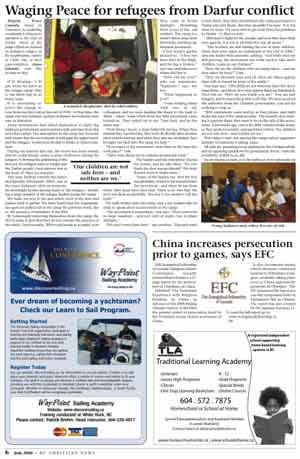
We make our way to the area where most of the men and
leaders tend to gather. We have heard that the humanitarian agencies pulled
out of the camp the previous week, due to the presence of members of
the JEM.
By temporarily removing themselves from the camp, the
NGOs make it clear that they do not tolerate the presence of the rebels.
Until recently, JEM would sneak in at night; now they come in broad
daylight, thumbing their noses at the aid workers. The camp is a
stone’s throw away from the border, and there are frequent
incursions.
A few leaders gather around us. “A boy has been
shot in the thigh, and his leg is broken,” says one, and takes us to
where the boy is.
“How old are you?” asks our interpreter,
“Eighteen,” says the boy.
“What happened to you?”
“I was tending sheep with two of my colleagues,
and we were leading the sheep to the wadi to drink – when some
rebels from the JEM movement came toward us. They yelled out to me:
‘Turn back and go the other way.’
“Next thing I know, a stray bullet hit my leg.
When they realized they had shot me, they took off. Shortly after,
another rebel vehicle arrived; and when they saw me wounded, they brought
me back into the camp for help.”
“How many of the movement were there at the
time this took place?” I ask.
“There were about seven vehicles around the
wadi.”
The leaders and the interpreter discuss the matter, and
he asks them: “Do you think the shot was accidental? His story
doesn’t seem to make sense.”
Continue article >>
|
“Some of the leaders say that the boy was
probably chased to be recruited into the movement – and when he ran
from them, they must have shot him. There is no way that the shot was fired
accidentally. The boy is too afraid to tell the truth.”
We walk further into the camp, and a few leaders take
us aside to speak about recent events in the camp.
“The movement is everywhere,” one says.
“They come now in large numbers – and not only at night, but in
plain daylight.”
“We don’t want them here,” says
another. “If people want to join them, then they should leave the
camp and return to Darfur and join them. But they
shouldn’t be here. It is not what we want. We came here to get
away from the problems in Darfur – to find security.
“ JEM used to fight for the people, and now
they have their own agenda. It is not at all what this was all
about.”
“The mothers are still wailing the loss of
their children, when they were taken as combatants at the end of
2006,” says one leader with intensity, adding: “And while they
are still grieving, the movement has come back to take more children. Leave
us our children!”
“How old are the children who are being taken
– and are they taken by force?” I ask.
“They are between nine and 18. Most are taken
against their will, or forced by some of the adults.”
One man says: “[The JEM] are not welcome here! We
don’t want them – and those of us who oppose them are
threatened. They tell us: ‘Who do you think you are? You are
just refugees, and we have the power to do this. We have received the
authority from the Chadian government; you can do nothing to stop
us.’
“JEM combatants come and go as they please, and
right under the eyes of the camp security. The security does nothing
to prevent them; they seem to be on the side of the movement. A few weeks
ago, one of the JEM vehicles broke down; so they spoke to security,
and used their vehicle. Our children are not safe here – and neither
are we.”
This camp is only one among the camps where aggressive
military recruitment is taking place.
All sides are preparing for an uprising by the
Chadian rebels, and an opposing crackdown by government forces
– with the possibility of JEM as an ally.
For an ongoing account, go to the weblog at:
www.wpcanada.org
July 2008
|